If you ask instructors what reduces them down in the Certificate IV in Training and Assessment, they hardly ever say the concept. The sticking point is almost always placement and proof. Not because the jobs are hard, however because the logistics take forethought and the proof rules are stringent. The TAE40122 is created to make you skilled in the lived craft of an instructor and assessor, which implies you require real sessions, actual learners, and real evaluation decisions backed by real evidence.
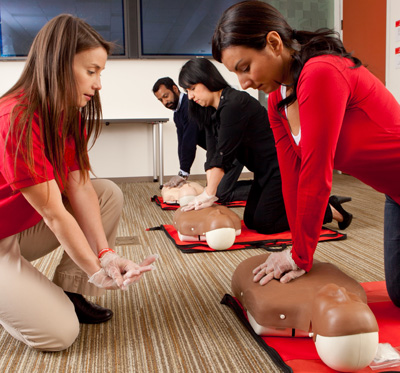
I have trained countless prospects via this phase, from skilled office mentors entering formal training, to brand-new trainers building confidence in front of an area. The ones who sail via reward positioning like a tiny project. They align the right location, the best students, the ideal records, and they capture evidence as they go rather than clambering at the end. This article distils those techniques right into something you can act on, whether you are finishing your cert iv training and assessment via a huge RTO or a boutique provider.
What "placement" truly suggests in the TAE40122
The TAE40122 needs you to prepare, deliver, and examine training to real learners. Some RTOs set up a host website, others expect you to arrange your own. In either case, a placement is a period where you provide several sessions to a target group, collect comments, refine your shipment, and carry out assessment according to an unit of proficiency. While substitute environments are often enabled, cert 4 in training and assessment the strongest portfolios originate from authentic work environment conditions because that is where irregularity lives. People show up late, the projector blinks out, a learner requires a different activity to comprehend the web content. Handling that irregularity is the point.
The specifics vary by RTO and system product packaging, yet an usual pattern appears like 3 or even more successive sessions of prepared training, a capstone session where you carry out assessment versus a nationally backed system, and a spread of evidence that proves you did what you say you did. Your RTO will certainly map your tasks to devices such as:
- TAEDES411 Usage nationally recognised training products to satisfy employment training needs TAEDEL411 Facilitate trade training TAEASS412 Evaluate competence TAEASS413 Participate in analysis validation TAELLN421 Incorporate core abilities support into training and assessment
The specific units in your training and assessment course may differ, yet the rhythms are comparable. You design, you supply, you examine, you improve.
The three contexts that shape your strategy
Early choices around positioning context can either increase your options or box you in.
Corporate or business training. Quick paced, concrete outcomes. Good for accessibility to eager students and contemporary equipment. The obstacle is scheduling time throughout changes, and getting permission to record or accumulate office documents.
Community and not-for-profit programs. Learner diversity is a strength. You will certainly encounter various language, literacy and numeracy needs, and you can design smart activities that make the learning inclusive. The compromise is resource constraints and the occasional last minute place change.
Registered Training Organisation classes. If your RTO permits you to aid or co-deliver, this can give stylish alignment with the cert iv tae requirements. The threat is being viewed as an assistant instead of the instructor of record. Ensure your function and proof civil liberties are explicit.
It is tempting to grab the initial host website that claims yes. Withstand that. You require a website that allows you be the liable fitness instructor for at least part of the delivery, provides a coherent team of learners, and sustains the privacy and document handling your evidence will certainly require.
What assessors look for, not simply what forms ask for
When I evaluate profiles, I check for four high qualities before I fret about web page count.
Clarity of extent. Have you picked an unit of expertise and stayed with it, or did you obscure two or three together? Combined ranges make your mapping messy and your assessment choices difficult to defend.
Chain of credibility. Do the session plans, participation sheets, images, slides, and evaluation records tell one regular story with days and names that align? If the names change or dates overlap unbelievably, I need to dig.
Judgment at work. Where did you adapt an activity based on student feedback or monitoring, and how did you record that adjustment? A tidy strategy is great. A clean plan that evolves programs genuine practice.
Assessment that satisfies the guidelines. Legitimate, trusted, adaptable, fair. This is not a motto. I search for guidelines that are clear, proof demands that map to the efficiency requirements and expertise proof, and choice making that is consistent with the benchmarks.
You can satisfy these examinations without generating a thesis. A well curated, well referenced pack that shows the tale is extra persuasive than a hill of raw files.
The proof backbone
Think about evidence in layers.
First, there is layout proof. This includes your training requires analysis, unit option, unpacked elements and performance criteria, session plans, mapping, sources, and LLN factors to consider. The goal below is to reveal you can take a training item and craft a knowing journey that fits real people.
Second, there is distribution evidence. Sign-in sheets, images of the area design, tools lists, copies of slides or handouts, learner responses, and your reflective notes on what worked and what did not.
Third, there is assessment evidence. The analysis plan, the tools and tools, the noting overview or criteria, finished prospect work with your comments, monitoring lists, examining records, and evidence of practical change where applicable.
Finally, there is quality control proof. Validation engagement documents, enhancements you made to devices after feedback, and any interactions with managers about evaluation decisions.
If you are completing the certificate iv training and assessment while working, your office files can do heavy lifting. A task instruction sheet, a security procedure, or a top quality checklist can be component of your source collection, given you reference them and verify you have permission to consist of them.
A portable list of core evidence
- Session plans for a minimum of 3 distinct sessions with timing, activities, products, and assessment touchpoints Attendance records with dates and readable names, sustained by pictures or space reservations when possible Assessment strategy and tools mapped to the system of expertise, including observation and examining instruments Samples of completed student collaborate with your marking and results videotaped, plus feedback types from learners Validation document showing engagement in evaluating evaluation devices versus the unit requirements
Keep each product version controlled and dated. If your RTO utilizes an LMS or e-portfolio system, replicate the structure there. If you make use of cloud storage space, keep a readme record in each folder that discusses what is inside and just how it maps to systems. It saves your assessor time and reduces the chance of a not yet acceptable result as a result of missing context.
Setting up your placement without burning goodwill
You are asking a workplace or neighborhood group to provide you time, room, and accessibility to individuals. That is a count on deal as much as it is a management one. Your technique needs to clarify the value to them, the moment dedication, personal privacy arrangements, and any security impacts.
I once dealt with a logistics business that agreed to a placement on the problem that training happened between 6 am https://telegra.ph/Digital-Devices-Every-Cert-IV-TAE-Student-Should-Master-05-12 and 8 am, prior to peak dispatch. The candidate adjusted her strategy to fit a tight window and used work watching throughout the shift as at work reinforcement. She accumulated far better evidence in 2 weeks than various other candidates collect in 2 months since the host might see instant benefits.
You additionally need a called call who can confirm your duty. Many RTOs call for a 3rd party record from a supervisor or workplace representative. See to it they know this in advance and maintain the form simple. Absolutely nothing sours the connection like a surprise two page paper at the end of the placement.
Five practical actions to safeguard and structure your placement
Define your system and students. Pick a device of proficiency aligned with the host's job, and recognize a student group of a minimum of three to 5 people with similar ability goals. Share the unit's plain English intent with the host to validate relevance.
Set days and setting of delivery. Secure three to five sessions throughout 2 to 4 weeks. Choose what is face to face and what can be blended online. Obtain spaces and devices scheduled in schedule invites that include you and your host.

Agree on evidence and privacy. Explain what you will certainly gather, how you will save it, and just how you will certainly de identify it if called for. Protected consent kinds early, including permission for pictures of training in progress.
Prepare resources and backups. Bring published duplicates of evaluations, extra pens, and an offline variation of your slides. If the projector falls short, have a task that does not require screens.
Confirm supervisor participation. If a third party report is needed, publication 15 mins after your last session with the supervisor to finish it while information are fresh.
These actions are straightforward, but when you formalise them in email, you create an audit trail. Your RTO will thank you for that level of clarity.
Aligning LLN and affordable modification with actual people
TAELLN421 is not a paper workout. It appears when you have a student who creates well however fights with numeracy, or a learner with great practical abilities that freezes in created tests. During positioning, display lightly for core skills. You do not need to run a full analysis unless your RTO requests one. A short activity at the start of the initial session will inform you who needs additional scaffolding.
Adjustments need to protect the proof needs of the device. If the system requires written responses to show underpinning knowledge, you can allow oral reactions recorded with notes and a records, supplied the web content continues to be the exact same. If the performance proof needs a task to be done to basic, you can alter the context somewhat, not the standard itself. Record each adjustment, the reason, and exactly how it still fulfills the rules.
A prospect I mentored collaborated with aged treatment team, most of whom spoke English as a second language. She shifted a portion of theory right into picture supported tasks, developed word count on the wall surface, and enabled short, videotaped verbal solution to knowledge inquiries. The end results were strong, and her proof trail clearly mapped those adjustments to fairness and flexibility.
Mapping that serves, not simply compliant
Mapping can end up being a box ticking ritual. Done well, it becomes your layout compass. Start with the aspects and efficiency requirements, after that identify each planned activity and evaluation job with the codes they resolve. You do not need to map every learning activity to every criterion. Avoid over mapping. If a standard calls for presentation of a procedure end to end, create one assessment tool that catches the entire flow, then use observation notes to note the sub actions. Use expertise inquiries to target understanding proof especially, rather than really hoping a practical task will certainly disclose it.
An excellent mapping table likewise calls out spaces. If you can not locate an area where you have covered required knowledge, placed a note to readjust your session strategy. Better to do that prior to shipment than to rebuild coverage after the fact.
Getting evaluation right, including the grey areas
The toughest judgment calls generally occur in evaluation. The regulations are easy to state and even more refined in practice.
Validity. Examine that each task determines what the unit calls for. If the unit requires planning and afterwards providing training, an assessment that only requests a written strategy is not valid. Add a practical observation with clear benchmarks.
Reliability. If 2 fitness instructors noted the very same proof, would certainly they make the exact same choice? This is where rubrics and annotated exemplars help. Program what qualified resemble with examples.
Flexibility and fairness. Offer paths for various learners as long as end results are equal. Offer sensible timeframes, and be explicit concerning what assistance is and is not allowed.
Authenticity. Especially in office setups, you need to reveal that the proof is the prospect's very own job. Trademarks, witness declarations, photos with context, and live observation lower risk. For on the internet submissions, short viva style knowledge checks can confirm understanding.
There will certainly be side situations. A learner finishes an ideal job under guidance yet can not answer standard concerns about why they did it by doing this. Did they memorize a manuscript, or are they competent? The safer choice is not yet qualified, with targeted responses and a possibility to show understanding. Tape-record your rationale.
Validation that makes your tools stronger
Validation is not simply a meeting to tick an unit demand like TAEASS413. If you bring your draft tools to a recognition session prior to shipment, you can capture ambiguous wording and insurance coverage spaces. 2 or three specialists that work with the unit regularly will find issues in mins that you may miss out on after hours of writing.
When you document validation, include who attended, their roles, what was assessed, the searchings for, and the changes you made. Keep old and new variations. The change log reveals the quality loophole at work and doubles as specialist growth evidence for your fitness instructor profile.
Managing personal privacy, authorization, and IP without drama
Host sites and students need to know that their information is secure. Usage authorization types that clarify plainly what will certainly be recorded, how it will be made use of, and the length of time it will be kept. Remove surnames and recognizing details from samples unless you have explicit approval. Where possible, blur encounters in images or capture area configurations as opposed to close of individuals. If you are making use of proprietary treatments or screenshots, obtain created clearance and watermark duplicates as "Educating sample only".
For storage, use your RTO's system first. If you should use personal cloud storage throughout collection, set folders to personal, and transfer to the RTO system immediately. Then delete regional duplicates if policy needs it. This might sound picky, however assessors are increasingly rigorous regarding personal privacy hygiene, and rightly so.
When substitute distribution is appropriate
Not every candidate can access an office or neighborhood host. Some RTOs run simulated friends for parts of the certificate 4 in training and assessment. Simulation can function when the atmosphere, jobs, and communications are sensible and the proof still meets the system criteria. That typically suggests a mate of a minimum of three to 5 participants, realistic resources, and situations that match the job context.
The restriction with simulation is spontaneity. You do not get the exact same messy adapt and conquer moments that show assistance ability. If you count on a substitute atmosphere, reinforce your reflection notes. Clarify what would certainly transform in an online work environment and exactly how you would manage it. Stabilize your profile with at least one actual analysis in the field if your RTO allows it.
Common pitfalls and how to prevent them
The most constant reason for resubmission is missing or weak mapping. Repair this at the start by developing your mapping along with your session strategies and evaluation tools. Treat it as style, not admin.
Another common concern is thin student comments. Generic "excellent session" comments behave for the vanity however except evidence. Ask one punctual regarding clearness, one about significance, and one concerning rate. Those produce insights you can act on, and they show you seeking and using feedback.
Candidates additionally journey on third party records finished by somebody who did not see the delivery. Avoid this by confirming the manager's existence at vital sessions, or by scheduling them to assess recordings where allowed.
Finally, prospects undervalue the moment needed for analysis noting and document keeping. If you run a 90 minute assessment, designate a minimum of the exact same amount of time for noting, feedback, and admin. Your future self will certainly give thanks to you.
Building your instructor account as you collect evidence
While you focus on meeting the instant demands of the cert 4 in training and assessment, think a step ahead. The records you produce now can form the foundation of your continuous instructor account. Keep short representations on what you discovered facilitation. Keep in mind any kind of industry involvement you performed to keep material existing. Keep certificates from pertinent PD. When you later put on supply as a cert iv trainer assessor, you will certainly have a cool plan showing skills and currency.
If you move into agreement training or internal L&D, these artefacts reveal employing supervisors that you comprehend both the compliance and craft sides of the function. That mix is rarer than it ought to be.
A functioned instance from beginning to finish
A prospect named Luis operated in a friendliness team rolling out a new point of sale treatment. He selected a device focused on giving service and handling purchases. He had accessibility to 2 venues and eight team throughout combined shifts. Right here is how he structured it.
He met the location supervisor, shared the unit intent, and agreed on 3 sessions over ten days. Session one was a 60 minute review in a silent corner before opening up, making use of screenshots and a demo terminal. He evaluated LLN by asking staff to comply with a brief, illustrated sequence in sets and noted that needed even more experiment numeracy around discounts.
Session 2 was on the flooring during a lull, with personnel biking via a practice situation. Luis used a monitoring list that mirrored efficiency criteria. He recorded photos of the arrangement and anonymised them for evidence. He likewise constructed in a quick expertise check making use of 3 verbal inquiries each, recording their responses.
Session three was the official assessment. Personnel completed a duty have fun with established transactions and a short written section on mistake handling. 2 personnel called for practical modification. Luis permitted dental responses, tape-recorded on his phone with approval, and transcribed them later. He noted versus a clear rubric and videotaped outcomes.
Throughout, he collected learner responses with 2 pointed inquiries and one open punctual. "What was clearest today?" "What still feels blurry?" "Inform me something I can boost." He used that comments by adding a laminated fast reference card at bench, which cut mistakes the next day. He then took his tools to a recognition team run by the team's training group. They suggested including a fixing item for an usual reimbursement scenario he had actually missed out on. He updated the device and documented the change.
His final portfolio consisted of session strategies, mapping, attendance, photos, evaluation tools and finished samples, a validation document, and representation notes. The assessor can follow the narrative in under 15 minutes due to the fact that the structure was limited and each piece was classified with date, session number, and unit codes. That degree of order did not occur by crash; it flowed from very early planning.
Making the most of RPL and debt, sensibly
If you have significant experience, Recognition of Previous Understanding can reduce your path through the certificate iv tae. RPL still calls for proof. If you have previously delivered training, produce session plans, attendance, responses, and assessments from that time. If you created or validated devices, consist of those with mapping. If you handled LLN modifications, show how. Solid RPL submissions look a great deal like solid training and assessment portfolios. The distinction is timing, not content.
Do not force RPL where your proof is thin. A short, targeted void training session frequently sets you back much less time than weeks of file hunting. Smart candidates blend RPL for systems where their proof is rich, and total distribution and assessment tasks where they wish to hone skills or develop present examples.
Timeframes and volume of knowing, realistically
The official quantity of learning for the cert iv in training and assessment is frequently shared in varieties, and RTOs make their programs accordingly. Candidates currently working in vocational training typically complete in 6 to 12 months, while those beginning fresh may take 12 to 18 months. Positioning activity usually spans a couple of weeks, yet collaborating calendars can push that out.
Set micro due dates. Week one, confirm host and dates. Week 2, finalise strategies and mapping. Week three and 4, provide and collect evidence. Week 5, examine and mark. Week six, confirm and brighten. The certain weeks might move, yet the framework stops drift.
Final thoughts from the assessor's side of the table
The cert iv in training and assessment is about capability you can see and touch. When your evidence reveals thoughtful style, responsive assistance, defensible evaluation, and a habit of representation, assessors unwind. We stop searching for voids and start acknowledging your practice.
Treat your placement as an online task with stakeholders, restrictions, and deliverables. Secure time to collect evidence as you go. Ask for genuine feedback from students and hosts. And keep your documents clean enough that an unfamiliar person could recognize it on very first read.
Do that, and the TAE40122 quits sensation like a management mountain and starts looking like what it is - an organized method to record and confirm the job you are already doing or prepared to do. That is the initial step from pupil to confident practitioner in the training and assessment space.